Showing posts with label running. Show all posts

Wednesday, July 18, 2012

5 Tips To Running Smoothly

It's been as hot as I can ever recall July being in Southern Ontario this year. The heat has made it awfully difficult to enjoy my runs, but keeping cool and running efficiently has helped. I wanted to pass on some simple techniques to make your running a little smoother.


1. Relax.
Easy to say, hard to do. I like to think about every muscle group from head to toe (literally), and make sure I'm not tensing up unnecessarily. I especially focus on this while on the treadmill, where it can get awfully boring! I start at the head and work my way down, ensuring I'm as relaxed as possible. Make sure you're not clenching your jaw and your facial muscles are relaxed. Don't tense your arms and don't ball up your fists. Shake your hands out gently. Make sure your legs flow freely and loosely.
Staying loose allows your running form to begin to flow more naturally and smoothly. Unnecessary tension can lead to early fatigue.

2. Breathe Rhythmically.
Again, really easy to tell you to do, but difficult to achieve practically. I like to tell newer runners to try and inhale and exhale for as close to an equal length of time as possible. If you can, try to inhale through your nose and exhale through your mouth. This slows the inhalation phase, and keeps the mouth from drying out. The nose also filters out a little of the air pollution and smog we've been experiencing with all this heat!
I also suggest maintaining a fixed rhythm of breathing with your foot strikes, although each individual needs to find the rate that work best for them. For example, perhaps it's 4 strides for every breath in, and 4 strides for each breath out for you. For an elite runner it could be as slow as every 6 or 8 steps for each breath. Again, try and keep it as even as possible.

3. Efficient Forward Motion.
The goal in running, ultimately, is to move a body forward through space. So, try to picture your body moving as smoothly, and in as straight a line as possible. Think of your arms and legs as pistons propelling your body, and moving only up and down. Try to avoid swaying side to side. Envision your arms moving in smooth arcs taking you forward.

4. Look Forward, Not Down.
I see far too many people looking down at their feet when they run. Not only is this potentially dangerous, as you aren't paying attention to traffic and your surroundings, but it also leads to poor form. Keep your head up, and focus your vision on a spot about 50 yards down the road. That "spot" should remain relatively steady as you move forward. If it seems to be bouncing, your stride is getting too long.

5. Focus on Foot Strike.
Finally, really focus on your foot strike. Land gently on your heel, and roll forward, all the way to your tiptoes. Think of your foot as a rocker bottom, and try to roll through the entire length of your step. Think about springing off your toes to maximize your next stride. Using this technique will cushion your foot stike, and explode into your next step.


Although this is condensed into 5 steps, it's quite a bit to think about. On your next run, pick one of them, and really focus on making a small change. Keep adding more, and as they become second nature I think you'll soon find your runs effortless!

Let me know what other techniques you use!


Tuesday, May 15, 2012

Some Shoe Advice

I frequently get asked for shoe advice. This comes from walkers, new runners, friends, competitive athletes cross-training, kids; you name it.


Surprisingly, the most common question I get is,"What brand do you recommend?"
My answer is always the same. The brand doesn't matter. It's the TYPE of shoe you need to look for. And that depends on your FOOT TYPE.


What Foot Type Do I Have?


You can go see a certified pedorthist, a sport medicine doctor, or you could start by "getting your feet wet".
That's right, go wet the bottom of your feet and walk on a dry sidewalk, floor, or nice wet beach to leave an impression on the surface. What do you see?


A FLAT FOOT (pes planus), or Pronator, will tend to leave a lot of impression on the ground, as the arch "falls" to the surface when you step down.

A HIGH ARCH (pes cavus), or Supinator will tend to leave a large gap between the heel and the balls of the feet, as the arch does NOT touch the ground with foot strike.

A NORMAL ARCH, falls somewhere in between.

Each foot type benefits from a more specific shoe, and certain people are much more sensitive to these changes.


THE FLAT FOOT
So, generally speaking a FLAT FOOT tends to require a "motion stabilizing" shoe. This support aims to keep the medial (arch) part of the foot from falling inward. Each company has it's own version of this, calling it a "stability" shoe, "motion stabilizer", or some variation on this theme. You can assess it's ability in controlling the shoe by looking at TWO AREAS - THE HEEL SUPPORT, and the MEDIAL ASPECT of the shoe.

HEEL SUPPORT - Squeeze the heel cup. It should be rigid, to keep the flat foot from rollling inward (pronating). If it doesn't look for another shoe.

MEDIAL SUPPORT -Take the shoe in both your hands with the toe facing you, and the laces up. Try twisting the shoe along the longitudinal axis. If it stay rigid, good. This will keep your arch from falling when you run. IF it twists easily, again, keep looking.


DON'T BUY THE HYPE!


People with Normal or Higher Arches can get away with a wider variety of shoes and should "test" them out for cushioning, comfort and fit. If these things are present, then I tend recommend the lightest shoes you can get away with, while providing cushioning.
Most reputable shoe stores will let you take them outside for a quick run around the block, and provide a generous return policy if something isn't right.

We all tend to get excited about certain colours, styles etc, whether we're a pre-teen, a novice runner or even the most seasoned athlete. Shoe companies definitely know this and spend a mind boggling amount (advertising expenditures, from Fortune Magazine, Feb 2012) of money trying to convince you that this year's model is a must have. The technology they come up with can sometimes rival NASA!

In the end, try to ignore the flash, and make sure you find something you'll be comfortable training with on a daily basis. After all, the goal is fitness, NOT fashion (mostly!). If you MUST have the fashion, some of the companies DO allow you to customize your shoe (NIKEiD, for example).
Try to visit a store that specializes in the footwear you are intending to buy, as their sales staff tends to be much more knowledgeable, and truly keen to help you, rather than sell you. It's worth the extra couple of dollars over a big box store. Trust me.


In future posts, I'll try to address other aspects, including "barefoot" style shoes, etc.

Let me know what you think and what you'd like to see in the future!


Wednesday, May 9, 2012

10 Tips to Getting Fit Forever

Everyone loves Top 10 lists. I'll write the list, you add to it, and I'll try to expand on some of the points in future posts.  Let's go.


  1. Set A Long Term Goal
  2. Set A Short Term Goal
  3. Be Consistent
  4. Take It With A Grain of Salt
  5. Fluids
  6. Just Go Do It.
  7. Make It From Scratch
  8. Go Harder.
  9. CHANGE something.
  10. Smile.


So, how do we get to long lasting fitness? Let's try to expand a little on these points.

1. SET A LONG TERM GOAL

This is critical. It isn't good enough to just say "I want to be healthier", or "I want to lose weight", or "I want to start running". How will you know if you've accomplished this? Answer: You never will.

Try to come up with something more concrete, like, "I want to lose 20 lbs", "I want to run a half-marathon", or "I want to be able to play with the kids without getting tired". With a clearly defined goal, you have a real target to shoot for. If you don't do this first, you won't know if you've made it.


2. SET A SHORT TERM GOAL


Once you have a target, breaking things down into more manageable pieces makes that goal more easily attainable. Whether you're working out at the gym, starting to run, bike, or swim, take a minute or two before EACH session, to decide on one or two things you want to focus on TODAY.

Are you working on your strength, your endurance, your speed, or something else?
Try picking ONE of your exercises and really focus on PERFECT technique.
Try doing ONE more REP of your training.
Try BEATING your lap time by just a bit.
Try going a minute LONGER on your run.

You get the idea. Having a short term goal, every day, that is achievable and attainable, brings the long term goal closer to being fulfilled!


3. BE CONSISTENT


The American Academy of Sports Medicine recommends 30-60 minutes of moderate activity 5 days a week (here.) I would encourage you to aim for as close to EVERY DAY if at all possible. The more you can make exercise a daily routine, like brushing your teeth, or having a shower, the more likely it is you will continue.

4. TAKE IT WITH A GRAIN OF SALT


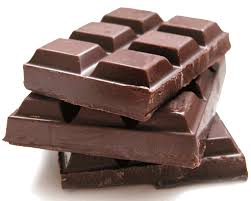
CHOCOLATE is GOOD FOR YOU!  RED WINE is GOOD FOR YOU!  GO GLUTEN FREE!
GET MORE VITAMIN D!

Yes, But. . . Chocolate has an awful lot of fat. Wine has a huge amount of empty calories. Going gluten free is important for people with Celiac Disease. Gluten free does NOT equal fat free, calorie free etc. Most gluten free food tastes awful (although this has improved dramatically over the last 10 years).

Vitamin D has been shown to be protective against a number of cancers, and is important for bone strength,
but sitting in the sun to get it for extended periods can cause skin cancer.

I think you get my point. The breathless articles in the news focus only on the purported benefits, without mentioning the down sides.

Everything in moderation, OK?


5. FLUIDS


We used to go on and on about getting 8 glasses of water a day, more if you were active. Even more if you were drinking any significant quantities of caffeine. Times are changing.
Using 8- 8oz glasses a day is a nice, simple thing to remember, but necessarily correct for everyone.

New guidelines, based on drinking in response to feeling thirsty is becoming the new normal.
Another means of checking hydration is comparing naked body weight before and after exercise.
The difference can estimate fluid losses from sweating and is a good starting point to rehydrate back to.
Watching urine darkness before and after exercise is another broad estimator of fluid loss, although a lagging indicator (ie. if the urine is dark, you already getting dehydrated). Here's a nice summary.

I hope to delve into this topic in much greater detail in a later post.

6. JUST GO DO IT.


Very often, the most difficult part about exercising is just getting started. Even the most die-hard athletes have days when they just don't feel up to it. On these days, I encourage you to promise yourself to at least lace up your shoes at the door. If you get this far, and honestly can't push yourself out the door, then go back to bed.

90% of the time, getting this far will get you going. And if you get out the door, it's surprising how much more you will be able to do. Just go.

7. MAKE IT FROM SCRATCH


Whether we're talking about brownies, pizza, burgers or smoothies, make your own if you can!
Why? You're in control of what goes into it. That means the amount of sugar, salt, fats, everything.
When reading ingredient labels of store bought or restaurant bought foods, the preservatives, sodium, chemicals, and calories can be shocking.

Homemade almost always means lower sodium, lower fat and certainly fresher ingredients. It also is a cost saver, as well as being more enjoyable, tastier, and a tendency to eat less. Need I say more?

8. GO HARDER


Try this. During your next workout, for the last minute of the exercise, go as hard as you can. For example, sprint the last minute of your run, get up out of the seat of your bike and go as hard as you can, whatever.
As your fitness level improves, try adding little accelerations DURING your exercise (ie, interval training).

The benefits are multiple. You are working in an anaerobic range (making all your muscles work harder). This is what causes "the burn" when you go hard.

You are increasing your heart rate, which then compensates by getting stronger.

You release more endorphins (the body's morphine), making you feel better when it's all over! This is what gives "the runner's high".

Try it. You'll like it!


9. CHANGE SOMETHING.


Every week, shake your routine up a bit.

Add in a new exercise. Try using a different machine at the gym.
Increase the weights you've been using by 5-10%.

Go a different route on your walk/ride/run.

Ask someone new to run with you this week.

Find a new recipe to try out on the kids tonight.

Changing things up, even a little, keeps things fresh and keeps you motivated.


10. SMILE.


Studies show (somebody actually studied this??) that smiling lowers blood pressure, relieves stress, and releases endorphins.

Next time the workout gets tough, try smiling. If nothing else, the guy you're racing is gonna worry what you've still got left.


That's it. In the coming blogs, I'll try to expand a little more on some of these points, and make them as practical as I can. In the meantime, give them a go.

Let me know what else should be on the list, and what you think so far!


Sunday, May 6, 2012

Short on Time? Try a Fartlek!


In our hectic lives, what with work, kids, driving kids, feeding kids; well you get the idea. . .

Although it's hard to find the time to stay active and fit, a "Fartlek" might be just the ticket.

What's a Fartlek?


Fartlek is a Swedish word, which literally means "Speed Play". Coined by Swedish running coach, Gosta Holmer, in the 1930's, the training method focuses on both speed and endurance.

The beauty of the method is that is rather unstructured, with intensity and/or speed varying based on the indiviudal's desires and time. So, if you've only got a half hour at lunch, an hour after work before taking the kids to hockey practise, or only 20 minutes in the morning, you can still get a good fartlek in.

How to start.


Once you've decided to go, just go!

1. Warm up. Easy jog for a few minutes.

2. Increase Pace. Get to about 60% of your maximum pace. A good way to determine this is a pace where you would find it hard to speak a full sentence without stopping to catch your breath.

3. Speed Play. The FUN PART. Pick a distance, and GO FOR IT.  If you're on the roads, sprint 'til the next street light, mailbox, or until the end of the guitar solo on your IPod.

4. Easy Jog. Recover and catch your breath, but don't stop jogging.

5. Go back to #3 and Repeat #'s 3 and 4, until you run out time.

As you get more comfortable and confident, increase the speed part, and decrease the recovery. You'll find you get a lot more out of your workout, and perhaps even enjoy it more!

Let me know how it goes!